
Landscaping companies
Google Ads and tracking for landscaping businesses.
Seasonal demand and recurring contracts make the math harder than a single-visit service. Maintenance contracts, one-time design work, and seasonal cleanups carry different economics and timelines.

Every account managed directly by Sadekul Islam.No account managers. No handoffs.


Records from similar accounts.
No published record from landscaping businesses yet. These two use the same call and form tracking in other trades.
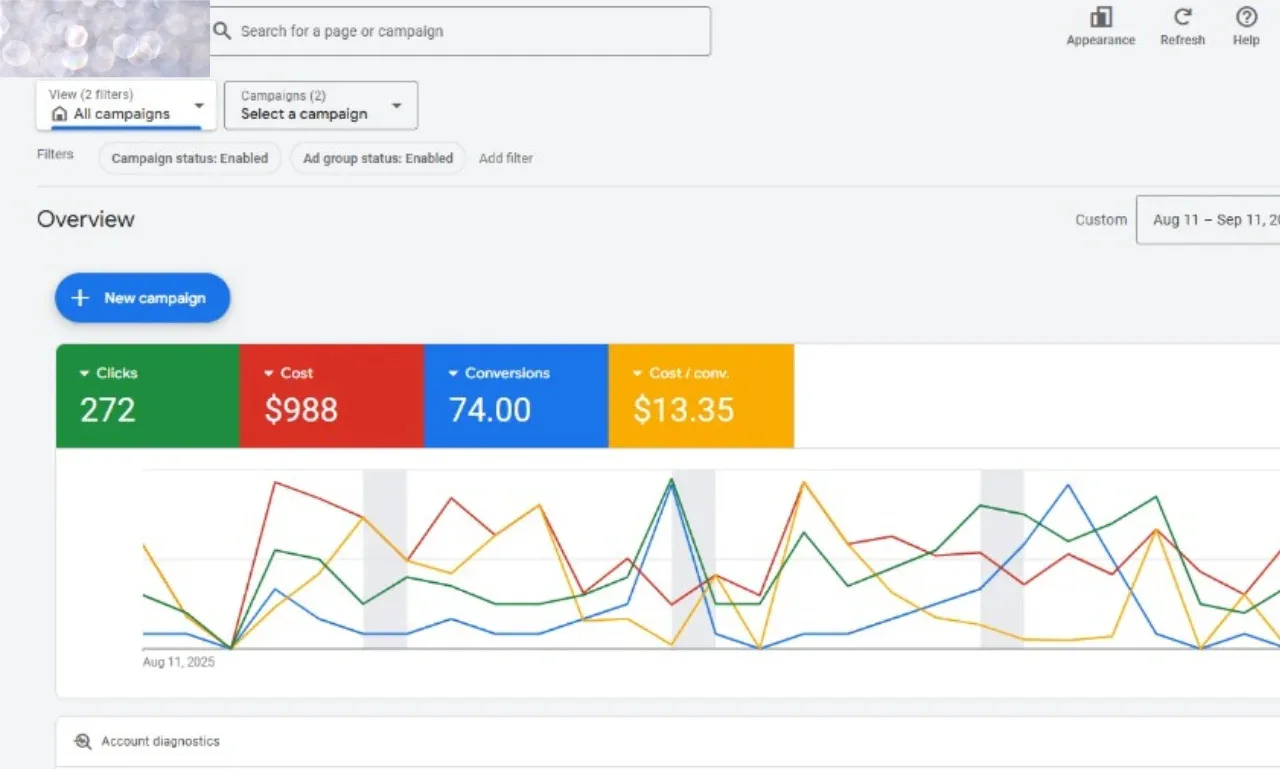
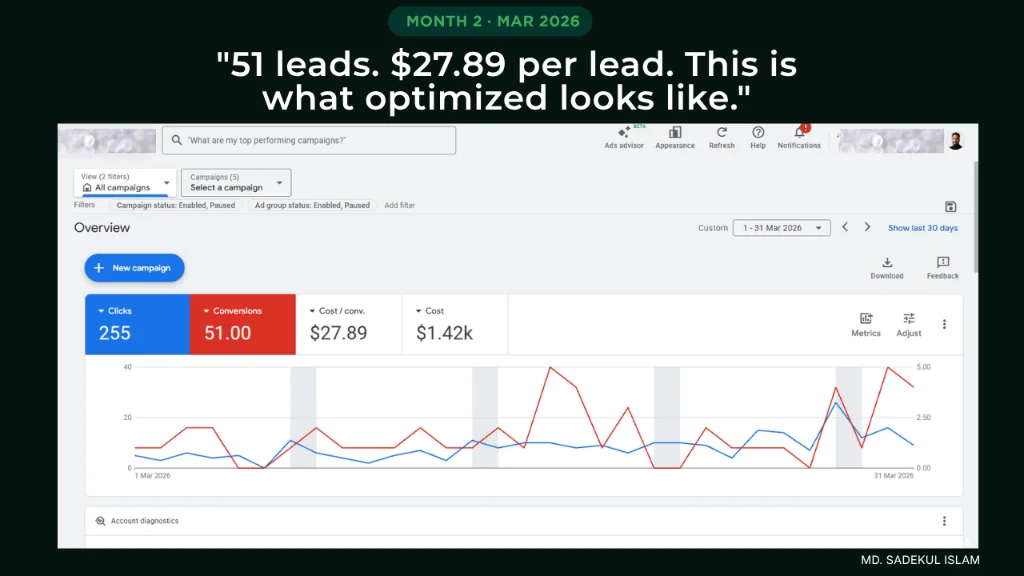
I run Google Ads for landscaping businesses around the jobs your crew can schedule and complete. A weekly mowing customer and a patio customer are not one account. One is a contract that renews across the season. The other is a project won once, after a consultation and an estimate.
Every engagement gets a fixed test budget and an end date, both in writing before launch. The account is judged on tracked calls and forms, what each cost, and whether they fit the work you want.
Landscaping is a route business and a project business
Lawn plans and one-time design work buy on two clocks. Weekly grass cuts, spring cleanups, patios, yard builds, and commercial grounds all differ in intent, price, crew time, and route needs.
Lawn maintenance depends on tight routes and staying power. A patio or yard build needs a consult, a quote, a site visit, and follow-up. The ad plan follows your services, season, map, crew space, margins, and sales flow.
What a landscaping enquiry is worth
A lawn call is not yet a weekly plan. A build call is not yet profit. Real profit depends on price, labour, stone and supplies, drive time, route fit, season, close rate, and how long a lawn client stays.
The monthly report splits maintenance and one-off enquiries, so you can see what each cost. Plan starts and renewals stay in your own records.
The seasonal calendar belongs in the plan
Demand moves with weather, service, yard type, and what your shop sells. Spring cleanup, planting, sprinklers, mowing, seeding, fall cleanup, yard lights, and snow plowing do not share one rush window in every town.
The budget starts from open crew space and real buyer demand. If the season is short, the test period runs when the work can be sold and done. Winter work is tracked on its own, not as proof that every service runs all year. The calendar is tested on your books, not guessed.
What I manage
Recurring maintenance
Built for the lawn plans and route zones you can serve: mowing, lawn care, feeding, bush trim, sprinkler checks, and routine yard work. The page shows visit schedule, zip codes, fit rules, and the next step. It never promises a route day your crew cannot keep.
Seasonal services
Cleanups, seeding, mulch, planting, sprinkler start-up and blowout, yard lights, and snow work get their own ads when the buying window and booking steps differ.
Design and hardscaping
Patios, stone walls, yard drains, outdoor kitchens, and big builds need a site visit and a quote. The page shows the next step, the map, the work you do, and what qualifies a lead. The decision uses closed job value, labour, stone costs, and your stated margin.
Commercial grounds
Property managers buy grounds care through site walks, bids, insurance papers, schedules, and contracts. If you serve commercial sites, the ads speak to that bid process rather than to a home lawn cut.
What gets tracked
I check what people typed, which ad they saw, where they landed, whether the call was answered, what job they asked for, and whether it became a booked job or a lawn plan. Call conversion tracking logs calls from ads and calls to a web number. Offline Conversion Import lets a shop count calls against its own booked-job rules.
The ad report tells me where the call came from. Your job log tells me what happened next.
Where landscaping spend leaks
Service mismatch. A lawn campaign draws DIY, mower part, grass seed, and how-to searches. A patio campaign draws photo browsing from people who are not hiring. I block these in the search-terms report instead of guessing a waste rate.
Blending maintenance with projects. Weekly mowing, a spring cleanup, and a large stone patio use close words while needing separate pages, follow-up, crew plans, and math.
Route economics. A caller can sit inside a wide radius and still be a bad fit after drive time, trailer moves, and lost route density. Location settings are not exact, so the map is checked against real caller addresses and booked-job math.
Judging recurring work by the first invoice. A signup has value once the shop confirms the plan started and is still active. The monthly report does not guess stay length.
Search Ads and Local Services Ads are separate decisions
Lawn care is a plan, won once and worth money each month it renews. Design and stone work is a build, won on a bid and worth a large check once.
Local Services Ads (LSA) bill per lead and fit the routine lawn search. Search Ads let you split out patio and design work, where the buyer compares bids as well as price. Each channel gets its own goal rule. A lawn signup is judged on how long the client stays. A build is judged on the signed bid. A blended cost per lead tells you nothing useful.
Contracts and installs need separate budgets
Lawn plans add up across a season. Design-build installs have a bid cycle, a calendar, and a crew booked for days. A single blended number hides both.
Lawn revenue often carries the spring and fall shoulders, while builds carry the big swings. Each gets its own budget line and its own decision. When one side hides the other in the report, the choice gets harder.
The monthly record shows the lead source, requested job, property type, zip code, answer status, quote or booking status, active plan status, and confirmed revenue.
The first test has a boundary
There is no single right budget for every landscaping shop. The first test depends on your job mix, season, ticket size, lawn plan math, labour and stone costs, route fit, map, phone speed, and how many jobs or routes your crew can take now.
Before launch, you approve my fee, the ad budget, the fixed test window, and the decision date in writing. The choice is keep going, adjust, or stop. More calls do not justify more spend if they do not turn into jobs that fit the calendar and the route.
I do not call revenue profit. Estimated profit appears only when your margin is on file, and it is marked clearly.
Start with three numbers
Tell me what your last ad run cost, what a typical booked job or lawn plan is worth after direct costs, and how many jobs or routes your crew can take now. If one number is missing, you and I work it out in the review.
Start a conversation or ask for a free review. The first step is a read-only review. If the math does not back more ad spend, I will say so.
Questions landscaping businesses ask
Should maintenance and design work share a campaign?
Usually not, when the services carry different ticket values, sales processes, labour, or decision timelines. Separating them gives recurring maintenance and project work a readable budget and a readable decision. A small account can begin simpler and split as the search-term and booking data justify it.
How should recurring maintenance be measured?
Track the initial enquiry, the booked start, the first completed service, the recurring signup, cancellations, active duration where you have it, and confirmed revenue. Do not value a contract by assumption, and do not treat the first invoice as the lifetime result.
Which landscaping searches should be excluded?
Start by reviewing DIY lawn care, equipment, seed and fertiliser products, jobs, training, free-service requests, and general information searches. Exclude the terms that do not represent a service you sell. Google Ads supports broad, phrase, and exact negative match types in Search campaigns.
Does seasonality mean I should stop advertising in winter?
Not automatically. It depends on the climate, the services, commercial work, snow removal, irrigation, and whether design consultations get booked ahead. The budget follows actual demand and capacity rather than assuming all landscaping work runs on one calendar.
Does a wider service area produce more profitable work?
Not automatically. A wider area can create more enquiries while reducing route density and adding travel. Google's location settings are a starting point; actual enquiry locations, drive time, route economics, and booked work decide whether the area works.
What should I track besides cost per lead?
Calls, forms, requested service, property type, service area, answer status, estimates, booked jobs, recurring signups, cancellations where available, job value, and the source you can defend. Cost per lead is a platform number. Cost per booked job or active contract is closer to the decision.
How do I know when the ads paid for themselves?
With your margin on file, estimated payback is the date estimated profit at your margin crosses cumulative advertising spend. Without your margin, the honest milestone is revenue crossing spend, and revenue crossing spend is not profit.
The form sends your details to me by email. I reply personally.