For agencies

Specialist Google Ads execution that makes your client reporting harder to argue with.

For agency owners who need senior work on local service accounts, without the reporting standard dropping before it reaches the client. Flat fee per account, no percentage of ad spend, and a Ledger that says exactly where the evidence stops.

Send an account for a free audit →

The problem you are solving

The account is fine. The reporting is what loses the client.

Local service clients do not churn because impressions dipped. They churn because nobody could answer "what did this earn me?" three months in a row, and activity reporting cannot answer it. These are the three shapes that problem usually takes when an agency brings me in.

Measurement gap

Nobody can trace a lead to a job.

Calls ring an untracked number, the form thanks people on the same URL it started on, and the conversion count includes a wrong number and a job-seeker. The campaign might be working. The report cannot prove it either way.
Capacity gap

Your team is good, but stretched thin.

Search-term reports get read when there is time, which is not weekly. Local service accounts punish that: a fortnight of unreviewed queries is a fortnight of budget spent on searches that could never become jobs.

Credibility gap

The client has stopped believing the deck.

They have been shown rising conversions while the phone stayed quiet, so now every number is suspect. Winning that back takes a report that volunteers its own limits, not a better-looking chart.

The deliverable

A Ledger that holds up wherever it travels.

The end client should be able to see what went in, what came out, and where verification stops. That standard protects the relationship better than activity reporting does, because it cannot be contradicted later by the client's own books.

What travels to your client
  • Spend, to the dollar, for the period
  • Tracked enquiries, separated by call, form, and message rather than blended into one conversion count
  • Which of those enquiries the client confirmed as booked work, and what they were worth
  • An explicit boundary line: what the record proves, and what it cannot
  • A verdict for the next period: scale, hold, or stop

Read the full rules in the attribution standard. It is a public page on purpose, so your client can check that the reporting they receive follows a stated method.

What never travels to your client
  • A revenue figure nobody confirmed
  • A return multiple built on assumed ticket values
  • Conversions counted twice because browser and server both fired
  • An impression or click chart standing in for a business outcome
  • A recommendation to raise budget that the record does not justify

“I count conservatively. Every untracked job is your client’s upside, not my credit.”

Three ways agencies use me

Pick the narrowest one that solves your problem.

Most engagements start at the top of this list and stay there. Taking on more than the problem requires is how a support arrangement turns into an expense you have to justify.

One-time build

Tracking and measurement only

Call, form, and message tracking, GA4 and GTM configured, duplicate-event checks, and a server-side container only where blockers and privacy limits justify the complexity. Delivered with preview and DebugView screenshots so your team can verify it rather than trust it.

Best when your campaigns are competent and the reporting is the weak link.

How tracking works →

Ongoing, per account

Full campaign management

Account structure around real services and locations, a negative keyword list built before launch, single-theme ad groups, Search and Performance Max on separate budgets, search terms checked daily in the first week, then on a fixed schedule.

Best when the account needs senior attention every week, not a monthly pass.

How management works →

Free, no obligation

Read-only audit first

Temporary read-only access, search-term reports read line by line, findings ranked by what they cost, and a starter negative keyword list your client keeps regardless of what happens next. It ends in a recommendation, including stop.

Best when you need to know what you are inheriting before you quote.

What the audit covers →

How the engagement runs

Four steps, and you can stop after the first.

Step one

Read-only audit, free

You send one account. I review it read-only and write up what it is costing, ranked by expense, with the evidence for each finding. No invoice and no obligation, and you keep the findings whether or not this goes further. This is deliberately the cheapest possible way to find out whether I am worth working with.

Step two

A scope and a flat fee, in writing

The audit determines the scope: tracking only, management, or both. You get a flat monthly fee per account, the spend cap for the proving period, and the verdict date. Before that document is signed, nothing is billable.

Step three

Tracking first, then the account

Measurement is verified before budget moves, because a rebuild judged on unreliable conversion data teaches nobody anything. Then structure: negatives before launch, single-theme ad groups, separated budgets, and a build sheet you review before it publishes.

Step four

A monthly Ledger you can forward

Each month, spend and tracked enquiries go out, your client confirms which became booked work, and the Ledger reconciles the two and states its boundary. Ten minutes of client time. If they cannot confirm, the report says so instead of guessing.

Commercial terms

Flat fee per account. No percentage of ad spend.

A percentage-of-spend fee means my income rises when your client's budget rises, whether or not the budget was justified. That is a bad incentive to hand a subcontractor, and it quietly compresses your margin every time an account scales. So the fee is flat, quoted per account, in writing.

How it works
  • Flat monthly fee per account, quoted after the audit
  • Tracking builds are a one-time flat fee, separate from management
  • Month to month. No minimum term, no exit fee
  • I invoice you, not your client
  • Ad spend is paid directly to Google from the client's own account
Where the assets live
  • The Google Ads account stays in the client's name
  • The tag container and GA4 property stay in the client's name
  • Negative keyword lists, build sheets, and Ledger history are handed over on request
  • Nothing is built inside an account I control

None of that is generosity. Hostage setups are how agencies inherit unfixable accounts, and I would rather not be the reason you inherit one.

Fit

Where this works, and where it does not.

The honest version, because a bad fit costs you more than a declined enquiry does.

A good fit
  • Local service client work: trades that answer a phone and book a job
  • A client contact who can confirm booked work once a month
  • Google Ads, Local Services Ads, or tracking gaps needing direct senior attention
  • Agencies that want the evidence standard to stay intact when it reaches the end client
  • Accounts where the client can actually service the demand more advertising would create
Not a fit
  • Ecommerce, SaaS, or lead-resale models: not my trade, and I will say so
  • Clients with no capacity to take on new work
  • Reporting that needs a return figure nobody confirmed
  • Volume arrangements where accounts are managed to a template
  • Anything requiring me to present activity metrics as business outcomes

Evidence you can check first

Two records worth reading before you send an account.

Both state their own limits, which is the point. Judge the standard by what the pages refuse to claim, not only by the headline numbers.

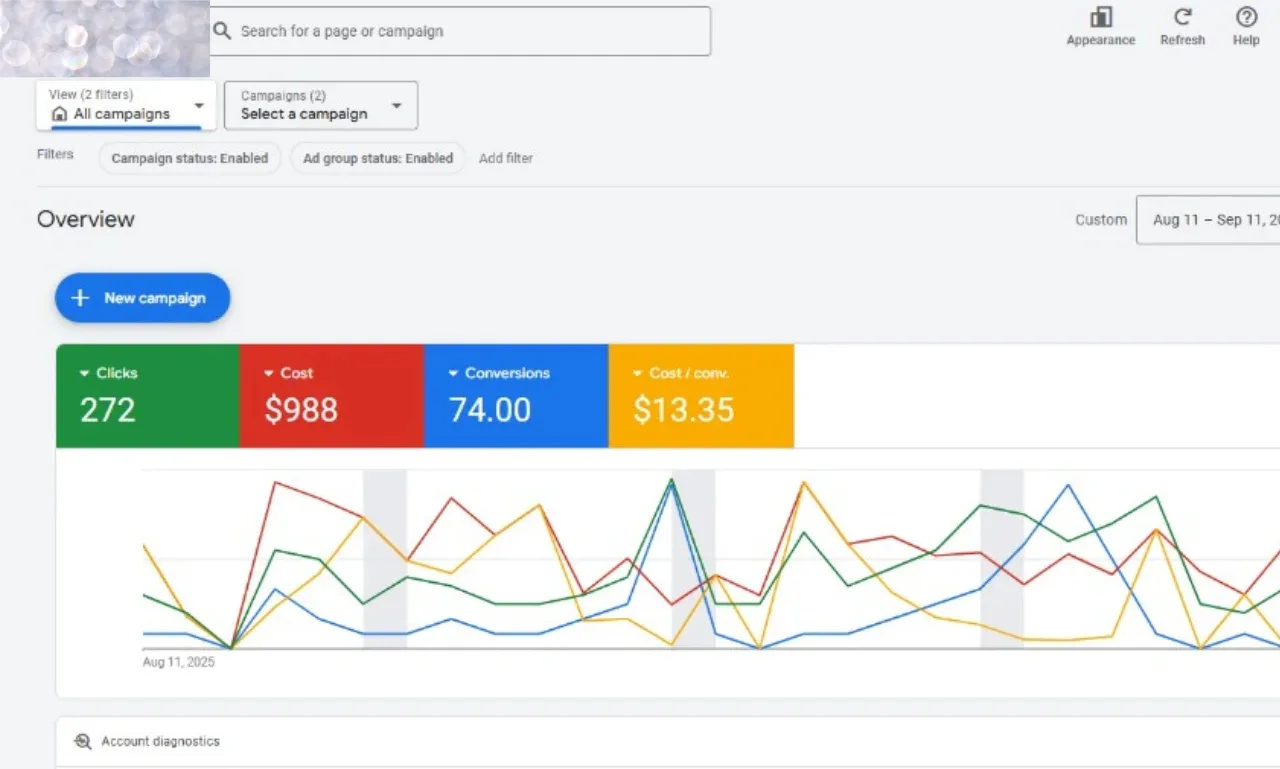
Pest control Google Ads dashboard over a 30-day window showing 272 clicks, $988.00 cost, 74 conversions, and $13.35 cost per conversion
Pest control · Lead record from Google Ads

74 reported leads at $13.35 on $988.00 of spend

After a full rebuild, the account reported 272 clicks and 74 leads at $13.35 each on $988.00 of spend in a 30-day window.

This record ends at the lead. Every conversion was measured through GA4 and Google Tag Manager, not guessed from click counts. That makes the lead figure reliable, but it is still not a booked-job, revenue, or profit claim.

Read the full record →

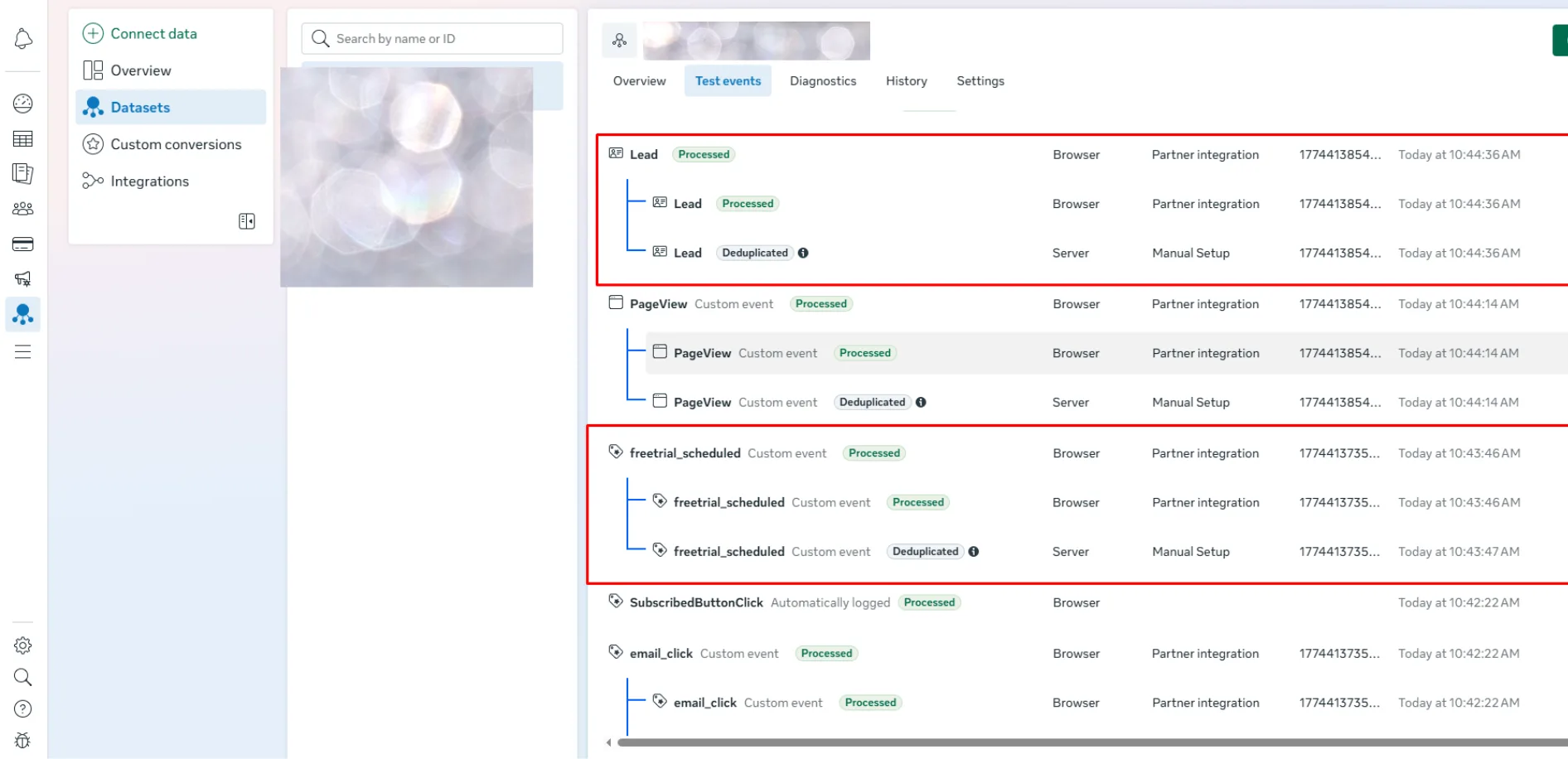
Meta Events Manager showing lead events from browser and server matching correctly, no double counting
Tracking · Setup record with validated screens

Server-side tracking, no double counting, validated

The screens document a two-container setup: web GTM plus server-side GTM on Stape, feeding GA4, the Meta Conversions API, and 5 Google Ads conversion actions from one counted stream.

These screens prove the measurement path works. They show events flowing, matching, and not double counting. They do not show campaign results or revenue.

Read the full record →

Questions agency owners ask

Answers before a call, not during one.

Do you white-label, or does the client know you exist?

Either. Most agencies keep me behind the account and pass the Ledger through as their own reporting, which is fine because the Ledger is written to survive that trip. If you would rather introduce me as your Google Ads specialist, that works too. What I will not do is claim a return the record does not support, whichever name is on the report.

Will you approach my client directly?

No. The client relationship is yours. I work through you, bill you, and take account access from you. If a client contacts me first, I route them back to you.

What do you need to take over an account?

Read-only access first, so I can audit before quoting. Then standard admin access to the Google Ads account and the tag container. The account and the container stay in the client’s name. I do not migrate work into an account I control.

How is this billed?

A flat monthly fee per account, quoted in writing, not a percentage of ad spend. That matters for you: your margin does not shrink when the client scales budget, and I have no incentive to recommend spend the numbers do not justify.

What if the audit says the client should not be advertising?

Then I write that down and you decide how to use it. An audit that says stop is more valuable to you than one that manufactures a reason to launch, because you are the one who has to keep the client next quarter.

Can you fix tracking without taking over the campaigns?

Yes, and it is the most common way agencies start with me. Tracking is a bounded, one-time build with a screenshot-verified handoff. If your in-house team runs the campaigns well but nobody can prove which enquiries became jobs, that is a measurement gap, not a management gap.

How many accounts can you take?

A small number at a time, because reading a search-term report line by line does not scale the way a template does. If capacity is full I will tell you when it opens rather than accept the work and thin it out.

What happens if the client leaves?

They keep the account, the container, the negative keyword lists, and the reporting history, because those were never mine to hold. The same rule protects you: nothing about this arrangement is designed to make leaving expensive.

Start here

Three numbers are enough to start.

  1. What the last marketing attempt cost, all-in
  2. What a booked job is usually worth
  3. How many jobs you can take on now

Send what you have. A missing number is not a blocker. Working it out is part of the audit. No contracts, ever. I reply within 12 hours.

Send the numbers

What is happening with your advertising?

Spend, leads, and what you suspect is going wrong. I reply within 12 hours.

No contracts. I reply within 12 hours.

Start with a number