
Locksmiths
Google Ads and tracking for locksmith businesses.
The customer decides in seconds. The ad either earns the call or the competitor does. Nearly all demand is immediate. Scheduled rekeying and commercial work run on separate economics.

Every account managed directly by Sadekul Islam.No account managers. No handoffs.


Records from similar accounts.
No published record from locksmith businesses yet. These two use the same call and form tracking in other trades.
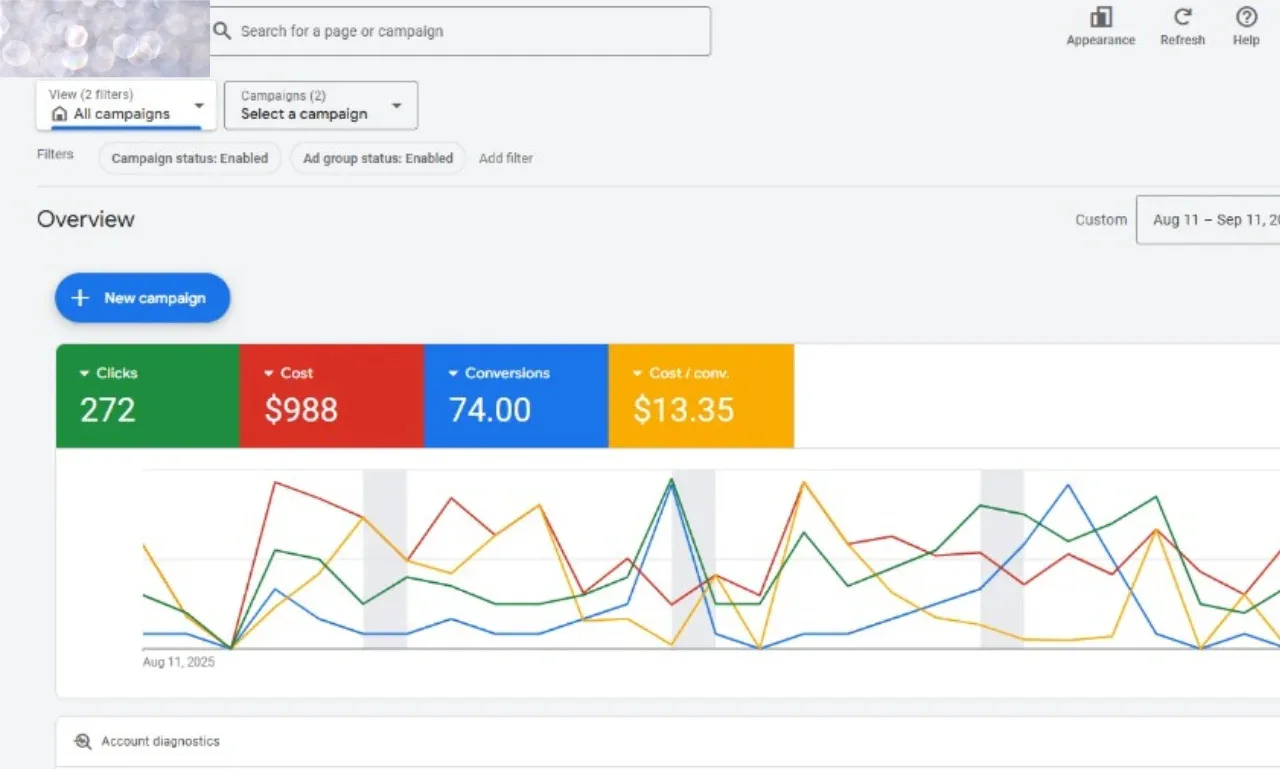
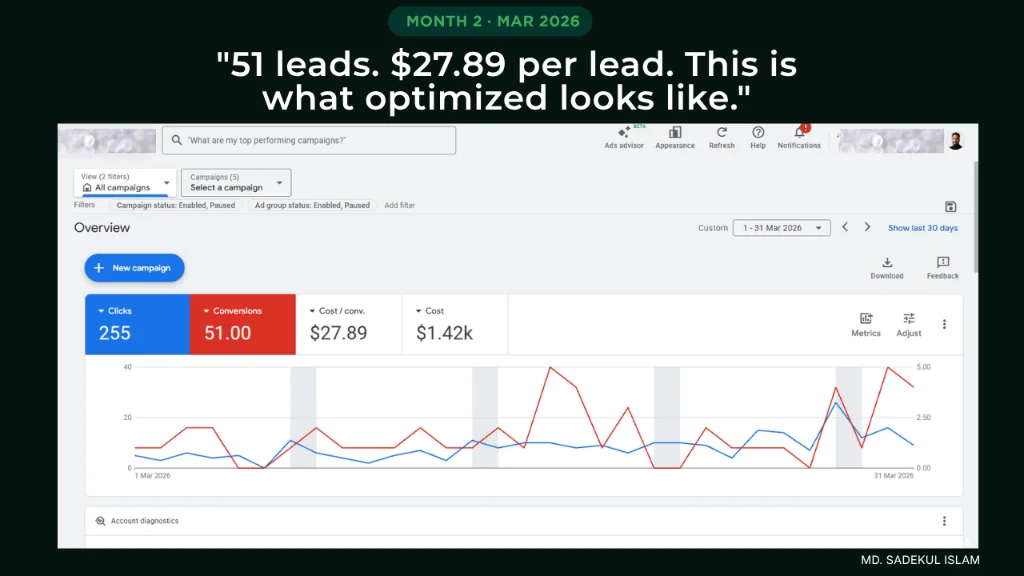
I run Google Ads for locksmith businesses around the calls your team can dispatch now. A car lockout is decided in the seconds it takes to compare listings, and it is won by whoever answers and can send someone now. A scheduled rekey or a commercial access quote runs on a slower clock.
Every engagement gets a fixed test budget and an end date, both in writing before launch. Track dispatch enquiries and service fit first.
Emergency, automotive, residential, and commercial are different intents
A driver locked out of a car, a homeowner rekeying a house, a property manager adding keypad locks, and an office needing a master-key system all search for a locksmith. They do not share urgency, tools, or price.
The campaign setup follows your job mix, hours, drive area, tech skills, prices, margins, and open call slots.
What a locksmith enquiry is worth
An urgent lockout needs fast phone handling and a nearby van. A house rekey can book for tomorrow. A car key or fob job depends on the car make, model, year, and programmer tool. Commercial access control often needs a site walk and a written quote.
The monthly report splits calls by job type and length, so you can see what each kind of call cost. A phone call is just the start. Dispatched and paid jobs are the real result, and those live in your dispatch records.
Legitimacy is part of the conversion path
Callers looking for a locksmith worry about call-center scammers and bait-and-switch pricing. Showing that you are a real local tech matters more in this trade than in almost any other.
Show your real business name, local area, honest hours, state license where required, insurance, real reviews, and the exact lock and key work your vans carry.
Where locksmith spend leaks
Bad search intent. Lock-picking videos, DIY guides, trade schools, jobs, key blanks, hardware store parts, and fob-programming forums look like locksmith words, but those searchers are not calling a van.
Mixed job types. Urgent lockouts, car fobs, house rekeying, and commercial door hardware need separate ads, pages, hours, and bids.
Long drives. A lockout call 25 miles away in rush hour falls apart before the tech arrives. I check your map settings against real call locations and completed jobs.
Missed calls. In an emergency trade, an unanswered phone rings on to the next locksmith in 15 seconds.
What I manage
Emergency lockout campaigns
Built around the urgent calls you can answer and run now: house lockouts, car lockouts, broken keys, and business lockouts. The ad matches your real staffed hours and drive range.
Residential rekeying and smart locks
Rekeying, deadbolt upgrades, lock repairs, and smart locks usually book for a set time slot. The page explains your service area, hardware options, and next step.
Automotive key and fob services
Ads match the exact car work you carry tools for: car lockouts, lost key replacement, transponder programming, and ignition repair. Because make, model, and year decide whether you can take the job, the report tracks car calls separately.
Commercial access and master keys
Master-key systems, panic bars, door closers, safes, and keypad access involve business owners, site visits, and quotes. If you run commercial work, those searches get their own campaign path.
What gets tracked
The report covers spend, recorded calls and forms, quality checks, and a next step.
I review what people searched, which ad they saw, where they landed, whether the call was answered, which service was requested, and whether it became a dispatched, booked, or completed job. Call conversion tracking covers calls from ads and calls to a website number, and imported call conversions let a business count calls against its own outcome criteria.
The platform record tells me where the enquiry came from. Your confirmation tells me what happened after it arrived.
Search Ads and Local Services Ads are separate decisions
Local Services Ads require the business to pass verification before it can show, and the verified listing is a real signal to someone locked out of a house at midnight. That makes them well suited to emergency lockout calls.
Search Ads suit the planned work: rekeying, smart locks, and commercial master-key systems, where the customer reads before deciding. The two channels get separate spend and separate outcome definitions, because a lockout and an access-control installation are not the same purchase.
Lockouts and access systems have different economics
An automotive lockout is quick, lower ticket, and bought at the moment of need. A commercial master-key or access-control system is a longer conversation with a bigger invoice. Buying only the first starves the second. Buying only the second leaves the truck idle between quotes.
Keep the campaigns separate because their economics and their proof differ. Judge lockouts on speed and volume, and system work on quote quality and close cycle. Neither number should stand in for the other.
The monthly record shows the enquiry source, requested service, caller location, answer status, dispatch status, booking status, completion status, and confirmed value.
The first test is bounded by hours and dispatch
There is no honest universal budget for a locksmith. The right first test depends on emergency coverage, service mix, average ticket, technician capability, service area, response process, hours, and how many jobs the team can take now.
Before launch, you approve my fee, the working budget, the fixed test period, and the decision date in writing. The decision is continue, adjust, or stop. More calls do not justify more spend if they do not become jobs the business can serve and defend.
A contribution estimate uses matched job values and your stated margin.
Start with three numbers
Tell me what the last marketing attempt cost, what a common booked locksmith job is worth after the costs you track, and how many jobs your team can take now. If one number is missing, working it out is part of the review.
Start a conversation or ask for a free review. The first step is a read-only review. If the numbers do not justify more advertising, I will say so.
Questions locksmith businesses ask
Should emergency and scheduled locksmith work use separate campaigns?
Usually, when the urgency, hours, landing page, technician capability, or economics differ. Separating them gives emergency calls and scheduled work a readable budget and a readable decision. A smaller account can start simpler and add separation as the search-term and booking data justify it.
Should automotive, residential, and commercial services share a campaign?
Not automatically. They can carry different search language, equipment, customers, and follow-up. Separate the service lines when that difference affects the ad, the qualification, the appointment, or the value of the booked job.
What searches should locksmith companies exclude?
Start by reviewing DIY and lock-picking searches, how-to content, training, jobs, parts, blank keys, products, and code or programming research. Exclude the terms that do not represent a service you sell. Google Ads supports broad, phrase, and exact negative match types in Search campaigns.
How should a locksmith show legitimacy in the ad and landing page?
Show the real business name, a real local address and service area, accurate hours, relevant licences or registrations where they apply, insurance information, genuine reviews, and a clear description of what the technicians actually do. Unsupported local presence or credentials are not substitutes for proof, and they damage trust once a customer checks.
Should locksmith ads run 24 hours a day?
Only if the business can answer and serve calls during those hours, or has a documented after-hours process. The campaign schedule and the promise in the ad have to agree with the operation.
Does a wider service area produce more profitable work?
Not automatically. An emergency call from far away can be unworkable once drive time, fuel, traffic, and the jobs it displaces are counted. Google's location settings are a starting point; actual enquiry locations and dispatched-job economics decide whether the area works.
What should I track besides cost per lead?
Calls, forms, requested service, caller location, answer status, dispatch status, booked and completed jobs, job value, and the source you can defend. Cost per lead is a platform number. Cost per dispatched or completed job is closer to the decision.
How do I know when the ads paid for themselves?
With your margin on file, estimated payback is the date estimated profit at your margin crosses cumulative advertising spend. Without your margin, the honest milestone is revenue crossing spend, and revenue crossing spend is not profit.
The form sends your details to me by email. I reply personally.